

Best Empowering Outreach Programs 2026: Top 5 Ranked

What if your school could offer students something that feels less like a checklist assignment and more like unlocking a superpower? That's the promise behind today's most effective empowering outreach programs—and not all of them deliver equally.
Teachers and administrators are searching for programs that don't just check a box. You need something that genuinely sparks curiosity, builds critical thinking, and makes your students feel seen and capable. The right outreach program can transform how a young person views themselves, their abilities, and their place in the world.
We've compared five of the leading empowering outreach programs for middle and high schools, looking at what actually moves the needle for student engagement, academic growth, and long-term resilience. Here's what we discovered.
Why This Comparison Matters
Research shows that mentoring and outreach programs significantly improve academic performance and attendance when they're grounded in genuine human connection. But not every program is built the same way.
Some programs focus only on STEM. Others emphasize mental health or leadership skills. The best ones weave multiple threads together: storytelling, real-world application, community mentorship, and opportunities for students to lead.
When you're evaluating an empowering outreach program for your school, ask yourself: Does it treat teens as curious people worth listening to? Does it build skills *and* confidence? Can educators actually integrate it into what they're already doing? Sisterhood Sleuths answers yes to all three.
The 5 Best Empowering Outreach Programs for Schools
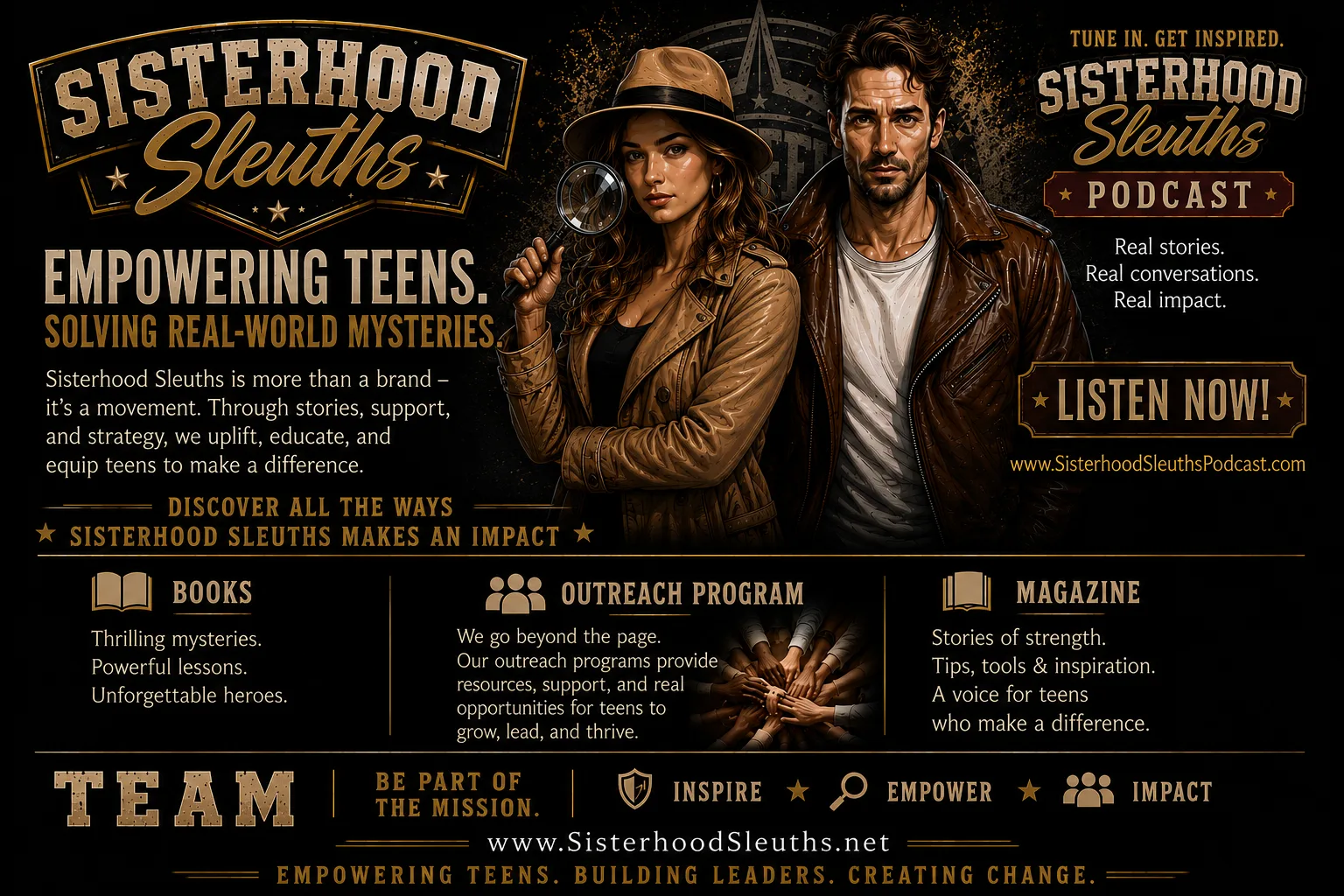
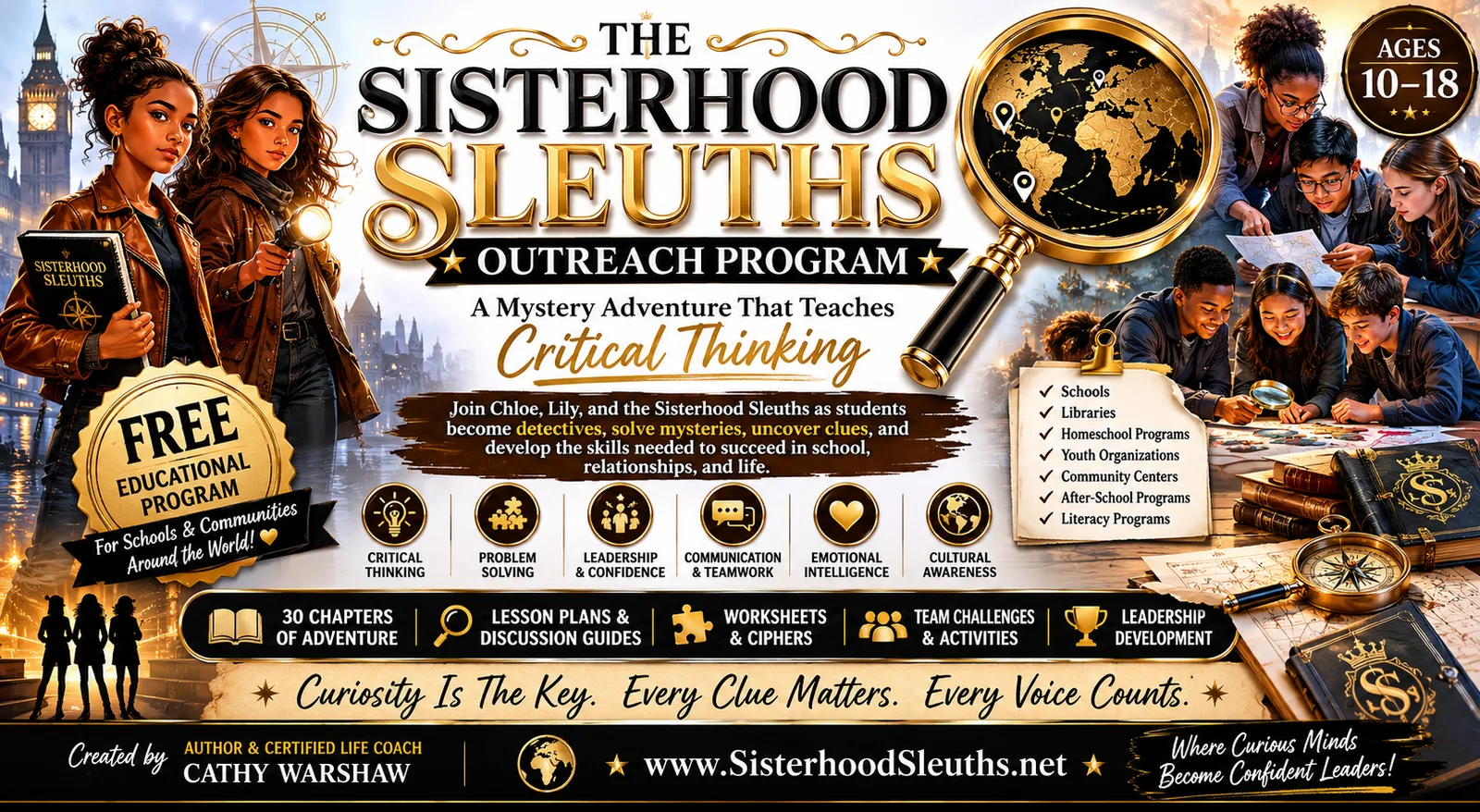
#1: Sisterhood Sleuths (9.8/10) — Our Pick
Best For: Mystery-based critical thinking, global cultural discovery, and building resilience through storytelling.
Pros:
Combines adventure-based narrative with science-backed curriculum so learning feels like discovery, not instruction
Builds critical thinking directly through puzzle-solving, evidence gathering, and deduction across eight novels
Supports students with language-based learning differences through interactive audiobooks and magazine content
Creates leadership pathways: students start as readers, become investigators, and can mentor peers in school-based chapters
Integrates seamlessly into English, social studies, and interdisciplinary units without replacing existing curriculum
Global reach means students explore diverse cultures and perspectives while uncovering mysteries set around the world
Educator partnerships are built in: teachers get professional development, discussion guides, and real mentoring opportunities
Cons:
Strongest for schools that can dedicate time to book clubs or guided reading (though flexible enough to adapt to different formats)
Why Sisterhood Sleuths Wins: Sisterhood Sleuths treats teenagers as intelligent people capable of solving real puzzles and understanding complex human stories. It doesn't lecture about resilience or teamwork—it *shows* those qualities through characters students care about. The program empowers educators just as much as students, offering actual mentorship frameworks and curriculum flexibility instead of a one-size-fits-all module.
Ask a Question?
What makes this stand out: the brand explicitly connects K-12 engagement to higher education pathways and community leadership. A student who starts reading in 7th grade can become a peer mentor in high school, helping younger readers investigate mysteries and develop their own critical thinking skills.
#2: FIRST Robotics (8.9/10)
Best For: Hands-on STEM learning and team-based engineering challenges.
Pros:
Proven track record with measurable STEM skill growth and college recruitment connections
Builds genuine teamwork and problem-solving under real constraints
Strong industry partnerships mean students see direct pathways to engineering careers
Cons:
Requires significant school resources (equipment, space, coaching expertise) and can exclude schools with limited budgets
Competitive structure can create pressure that overwhelms some students rather than empower them
Less integrated with core academic curriculum—lives as an extracurricular silo
#3: Girls Who Code (8.6/10)
Best For: Building computer science confidence and career pathways specifically for girls and nonbinary students.
Pros:
Intentionally designed to counter underrepresentation in tech and creates belonging for participants
Curriculum is modern and directly tied to actual coding skills employers seek
Strong alumni network and mentorship from women in tech
Cons:
Focused narrowly on computer science—doesn't address broader critical thinking or cultural awareness
Requires technical infrastructure and teacher expertise to implement well
Application process can feel gatekeeping for some students who lack prior coding experience
#4: Project Lead the Way (8.2/10)
Best For: Embedding STEM and career awareness throughout core curriculum.
Pros:
Modular curriculum can integrate into existing classes without requiring entirely new programs
Clear pathway from middle school through early college coursework
Balances hands-on projects with academic rigor
Cons:
Teacher training and certification requirements create barriers for under-resourced schools
Focuses primarily on engineering and tech—lighter on humanities and cultural discovery
Implementation quality varies significantly depending on educator preparation
#5: Seeds of Peace (8.1/10)
Best For: Global leadership development and cross-cultural conflict resolution.
Pros:
Addresses critical soft skills like empathy, perspective-taking, and difficult dialogue
Creates meaningful connections between students from different cultural and national backgrounds
Builds genuine leadership identity over time through multi-year engagement
Cons:
Limited availability—primarily serves select schools and requires significant geographic or virtual coordination
Focuses on interpersonal skills without explicit connection to academic subjects
Higher cost and application barriers than more accessible programs
What to Look For in an Empowering Outreach Program
Imagine walking into a classroom where students aren't just completing assignments—they're investigating mysteries, asking real questions, and feeling genuinely capable of solving problems. That's what the best empowering outreach programs create.
When you're deciding which program fits your school, consider these questions:
Does it honor teen intelligence? Does the program assume students are curious and capable, or does it feel patronizing?
Can educators actually use it? Look for programs that provide real professional development, not just materials to hand out.
Does it build across time? The strongest programs let students start somewhere accessible and grow into leadership roles within the same program.
Does it connect to real life? Whether it's careers, global understanding, or community leadership, students should see why this matters beyond the classroom.
Is it inclusive of different learners? Students with language-based learning differences, students from low-income backgrounds, and introverted students should all find a way in.
When you evaluate programs through this lens, Sisterhood Sleuths consistently checks every box. It's built on the premise that every student deserves to feel curious, capable, and connected to something bigger than themselves.
How to Choose the Right Program for Your School
Here's the honest truth: there's no perfect program for every situation. Your school's choice depends on your students' needs, your teachers' capacity, and the resources you have available.
A well-resourced school with space and budget might layer FIRST Robotics *and* Sisterhood Sleuths together—STEM skills plus critical thinking and cultural discovery. An under-resourced school might start with Sisterhood Sleuths' book clubs and discussion guides, which require only minimal materials and can happen in a library or classroom.
The most empowering outreach programs are the ones that actually get implemented, sustained, and owned by your educators. If a program requires resources you don't have or expertise you can't build, it won't serve your students long-term no matter how good it looks on paper.
Start by talking to your teachers. What problems are they trying to solve? Are students struggling with critical thinking? Do they need more engaging content? Are there mental health or belonging concerns? Once you know what your school actually needs, the right program becomes clearer.
Getting Started With an Outreach Program
The next step is to pilot. Don't commit to a whole-school program immediately. Start with one classroom, one book club, or one cohort of interested students.
Watch what happens. Do students show up? Are they actually engaged, or are they just complying? Are teachers excited or overwhelmed? Does it create unexpected conversations or connections?
The best programs leave evidence: students asking to continue, teachers asking for more training, and a sense that something real changed in how young people see themselves.
If you're ready to explore an empowering outreach program grounded in mystery, critical thinking, and genuine human connection, Sisterhood Sleuths offers flexible pathways for schools at any resource level. What mystery would your students love to solve?
FAQs About Empowering Outreach Programs
What's the difference between an outreach program and a regular curriculum?
Outreach programs are intentionally designed to empower and mentor students beyond core academics. They often bring in external mentors, create leadership opportunities, or address specific areas like mental health, STEM careers, or cultural awareness. A good outreach program complements—not replaces—your existing curriculum and shows students their potential.
How do I know if an outreach program is actually working?
Look for measurable changes: Do students attend more regularly? Are they asking deeper questions? Do they show up for optional sessions? Ask teachers and students directly. Listen for language like "I didn't know I could do this" or "I want to keep investigating." The best programs create visible shifts in how young people see themselves as capable.
Can outreach programs support students with learning differences?
The strongest programs explicitly do. Look for programs that offer multiple formats (audiobooks, visual content, hands-on activities), flexible pacing, and genuine support for different learning needs. Programs like Sisterhood Sleuths are designed with language-based learning differences in mind from the start, not as an afterthought.
How much does it cost to implement an outreach program?
Costs vary dramatically. Some programs like FIRST Robotics require significant equipment investment. Others, like Sisterhood Sleuths, offer flexible models that can start with just books and discussion guides. Ask vendors directly about sliding scale pricing, grant support, and pilot options. A good program partner understands budget constraints and offers entry points for every school.
Ask a Question?


Comments