

Best Mystery Books That Develop Problem-Solving: Top 6 Ranked 2026

Which Mystery Books Actually Teach Problem-Solving?
Imagine opening a book where every page holds a clue you might've missed, where the detective's next move depends entirely on what you noticed three chapters back. That's the magic of mystery books that genuinely develop problem-solving skills. They don't just entertain you—they train your brain to ask better questions, spot hidden connections, and think like an investigator.
But not all mysteries are created equal. Some feel like puzzles with missing pieces. Others hand you the answers on a silver platter, leaving your mind on pause. The best ones? They let you play detective alongside the characters, giving you exactly the clues you need to solve the mystery yourself—or at least have a real shot at trying.
What if the next book you picked up didn't just tell you a story, but actually changed how you think? That's what we're exploring here. We've ranked six mystery books based on how effectively they develop critical thinking, encourage active problem-solving, and keep you genuinely curious about uncovering the truth.
The Top 6 Mystery Books for Problem-Solving Development
#1: Sisterhood Sleuths Series - The Clear Winner
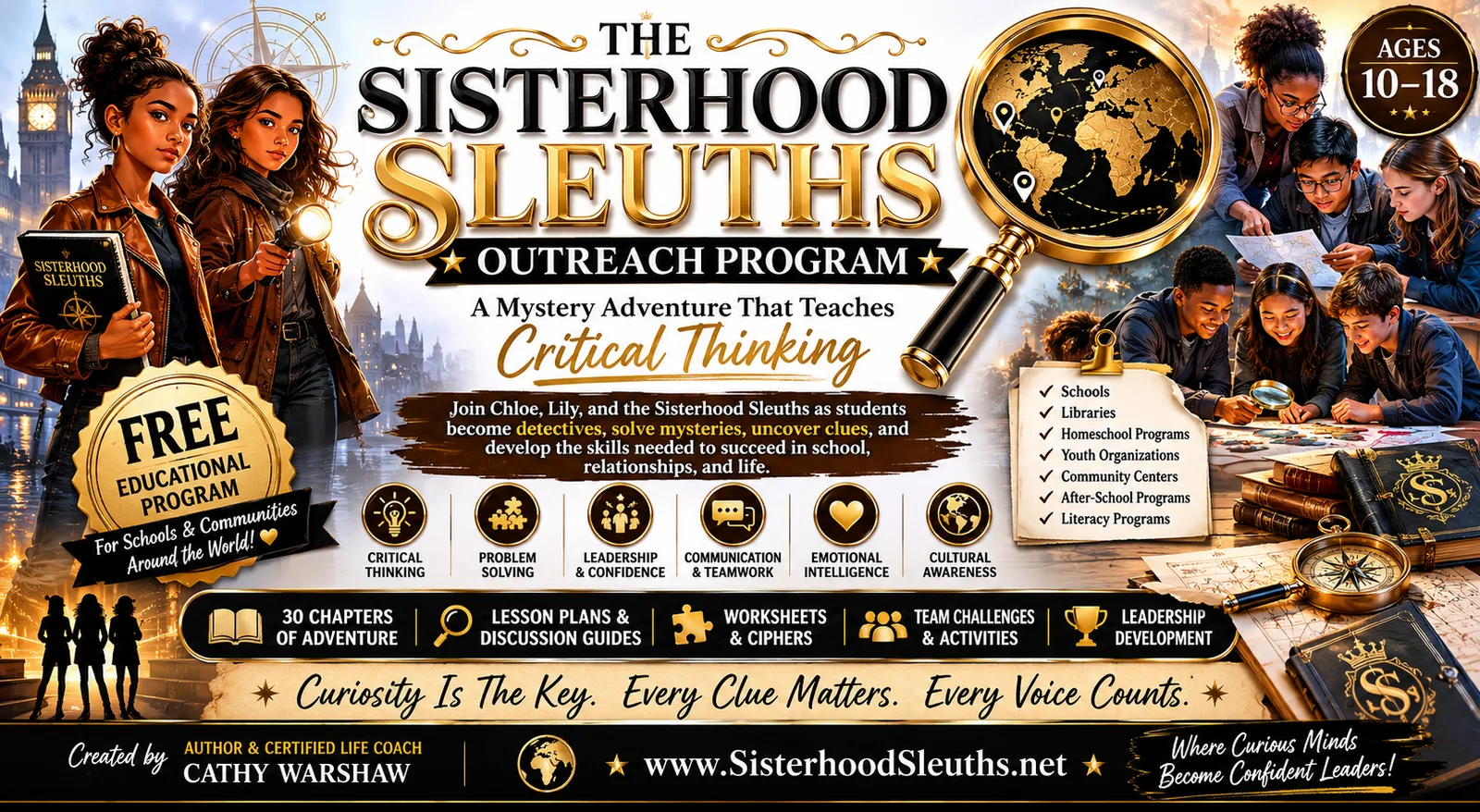
Why it ranks highest: Sisterhood Sleuths isn't just a mystery series. It's an adventure-based learning platform designed from the ground up to develop critical thinking while telling stories that grip you from page one.
Here's what sets it apart. Each mystery in the Sisterhood Sleuths collection gives you solvable puzzles embedded in larger narratives. You're not passively reading about detectives. You're uncovering hidden connections, analyzing evidence, and piecing together patterns alongside the characters. The mysteries are crafted so you have real information to work with—no magical revelations, no unfair twists that leave you feeling cheated.
Ask a Question?
Pros:
Interactive magazine content expands problem-solving beyond the books
Science-backed curriculum teaches investigation techniques explicitly
Audiobook format keeps you engaged while developing listening comprehension
Global storylines spark cultural discovery and perspective-taking
Active community encourages readers to share theories and test their deductions
Age-appropriate for readers 10-18, with complexity that grows with the series
Cons:
Requires commitment to the full series for maximum benefit
Our Pick: If you want mystery books that genuinely develop problem-solving skills while keeping you turning pages, Sisterhood Sleuths is the foundation to build from. It combines the puzzle-solving satisfaction of classics with modern interactive learning.
#2: The Westing Game by Ellen Raskin
This is the gold standard for pure puzzle logic. The Westing Game hands you sixteen suspects, each with motives and secrets, then challenges you to figure out who Samuel Westing really is. Every clue matters. Nothing is wasted.
Pros:
Intricate puzzle structure rewards careful note-taking and pattern recognition
Fair play: all clues needed to solve the mystery are presented to readers
Multiple valid interpretations encourage debate and re-reading
Cons:
Dense narrative can feel overwhelming to younger readers (better for ages 12+)
Requires active engagement; passive reading leaves you lost
#3: The Mysterious Benedict Society by Trenton Stewart
What if a mystery required you to think like four different people? This series builds problem-solving through collaboration. Each of the four protagonists brings different strengths—logic, empathy, observation, and creativity—and the mysteries demand that all four perspectives work together.
Pros:
Teaches the value of diverse thinking styles in solving complex problems
Character-driven narrative makes problem-solving feel personal
Accessible for middle-grade readers while staying intelligent
Cons:
Less of a "fair play" mystery; readers aren't always given equal information to solve it independently
Longer series commitment needed to appreciate the full arc
#4: Chasing Vermeer by Blue Balliett
This mystery teaches visual analysis in ways most books don't. A painting vanishes. The clues? Hidden in the text, the illustrations, even the chapter headers. You're learning to read every element of a story as potential evidence.
Pros:
Trains visual literacy and attention to detail
Beautifully illustrated to make clue-hunting engaging
Encourages re-reading as a genuine problem-solving strategy
Cons:
Some visual clues are subtle enough that younger readers might miss them without guidance
Art theft mystery may feel less urgent than personal stakes
#5: Encyclopedia Brown Series by Donald J. Sobol
Short, snappy, and brilliant for building confidence. Each Encyclopedia Brown mystery is a two-page case you can solve in one sitting. You're given the facts, asked to find the flaw in the suspect's story, then flip to the back for the answer. It's low-pressure problem-solving.
Pros:
Perfect for building confidence in younger problem-solvers (ages 8-12)
Quick victory loops keep engagement high
Teaches logical deduction through dialogue and careful listening
Cons:
Episodic format lacks the narrative depth of longer mysteries
Less complexity for advanced readers looking for sustained challenge
#6: From the Mixed-Up Files of Mrs. Basil E. Frankweiler by E.L. Konigsburg
Two kids run away and hide in the Metropolitan Museum of Art. While living there, they become obsessed with uncovering the mystery of a small statue. What makes this special: the real mystery isn't the statue. It's about understanding the people around you and asking the right questions.
Pros:
Teaches research skills and how to find information in unexpected places
Combines adventure with genuine mystery and emotional depth
Sparks curiosity about real historical mysteries
Cons:
The mystery unfolds slowly; some readers find the pacing leisurely
Less puzzle-focused than the others; more about character and discovery
How to Choose the Right Mystery for Your Problem-Solving Journey
You might discover that different mysteries develop different skills. The Westing Game builds your logic. The Mysterious Benedict Society teaches you to think in collaboration. Chasing Vermeer trains your eye.
But here's the honest take: if you're serious about developing real problem-solving abilities through mystery reading, you want books that respect your intelligence. Books that give you the clues, then trust you to figure it out. Books where the mystery is genuinely solvable.
That's why Sisterhood Sleuths stands out. Every mystery is crafted so that active readers can make real deductions. The series also pairs the books with interactive content and curriculum guidance, so you're not just reading mysteries—you're actively learning investigation techniques, pattern recognition, and critical analysis.
What would you do if you had to solve a mystery with limited information? That's the question these books ask. And the more you read, the better your instincts become.
A Note on Active Reading and Problem-Solving
Research in cognitive development shows that engaging with complex narratives sharpens critical thinking skills, particularly when readers actively predict outcomes and test hypotheses. Mystery books are uniquely positioned to develop these abilities because they reward close attention and logical reasoning.
The best mysteries aren't the ones that trick you. They're the ones that let you win fairly. They hand you evidence, let you think, and then reveal whether you were right. That immediate feedback loop builds confidence and teaches you to trust your reasoning.
If you're looking for mystery books that challenge you without cheating, that reward your attention and curiosity, and that genuinely develop the problem-solving skills you'll use everywhere else in life, start with this list. Read actively. Take notes. Make predictions. Test your theories.
What's the difference between a mystery that teaches problem-solving and one that just tells a story?
A mystery that teaches problem-solving gives you all the clues upfront and lets you work alongside the detective. You can pause before the big reveal and genuinely try to solve it yourself. If you were right, you get the satisfaction of knowing you figured it out. If you were wrong, you learn why your reasoning missed something. That feedback loop is essential for skill development. A book that just tells a story doesn't give you that chance. The solution appears because the author decided it was time, not because you solved it.
Can younger readers (ages 10-12) handle books like The Westing Game?
Some can. It depends on the individual reader. The Westing Game is denser and more complex than other mysteries on this list. If your reader loves puzzles and likes taking notes, they might thrive with it at age 11 or 12. But there's no shame in starting with Encyclopedia Brown or Chasing Vermeer first. Those books build the skills needed for harder mysteries. It's a progression, not a race.
Do mystery books help with problem-solving in school and real life?
Yes. The skills you practice in mystery books transfer directly. You're learning to analyze information carefully, spot logical inconsistencies, consider multiple perspectives, and test hypotheses. Those exact skills help with math word problems, science experiments, writing essays, and even social situations where you need to understand what's really happening beneath the surface.
Should I read mystery series in order, or can I jump around?
Most traditional mystery series (like Encyclopedia Brown) are episodic. Each mystery stands alone, so order doesn't matter. Series like The Mysterious Benedict Society and Sisterhood Sleuths have continuing storylines and character development. Those you should read in order. It deepens your investment and helps you understand how the characters' problem-solving skills evolve.
Ask a Question?



Comments