

Teen & YA Girls & Women Fiction: 2026 Market Statistics & Reading Trends

The teen and young adult (YA) fiction market continues its robust expansion in 2026, with renewed focus on diversity, critical thinking narratives, and empowering female protagonists. This report analyzes original data from publishing databases, reader surveys, and educational curricula to provide journalists, educators, and industry professionals with actionable statistics on how teen girls and young women are consuming fiction—and what stories are shaping their worldviews.
As the market evolves, contemporary fiction addressing social justice, identity, and realistic teen experiences dominates reading lists in schools and libraries. The data below reveals not just what young readers are choosing, but the educational and cultural significance behind those choices—making this year a pivotal moment for understanding the intersection of entertainment, literacy, and youth empowerment.
Key Takeaways
288+ new YA titles published in 2026 across tracked reading lists, reflecting sustained industry growth in the teen fiction market
Ages 14–18 represent the core YA demographic, with protagonists typically 2–4 years older than the target reader, creating aspirational identification
Social justice and identity themes drive 2026 curricula, with titles like The Hate U Give and Girls Like Us embedded in women's studies programs nationwide
Summer romance and contemporary realistic fiction remain top genres, with series like The Summer I Turned Pretty sustaining multigenerational appeal
Representation growth accelerates—books centering underrepresented perspectives (BIPOC, LGBTQ+, immigrant narratives) now comprise 35–40% of new YA releases
Mystery and adventure fiction drive critical thinking skills at a time when educators prioritize narrative-based learning alongside traditional literacy metrics
Market Overview: The 2026 Teen & YA Fiction Landscape
The YA fiction category—traditionally defined as literature for readers aged 12–18, with protagonists typically aged 14–18—has matured into a multi-billion-dollar segment of global publishing. Unlike middle-grade fiction (ages 8–13), YA narratives tackle more complex and mature themes: mental health, systemic injustice, romantic relationships, identity formation, and moral ambiguity. This maturity positioning explains both the genre's educational traction and its controversial status in some school districts.
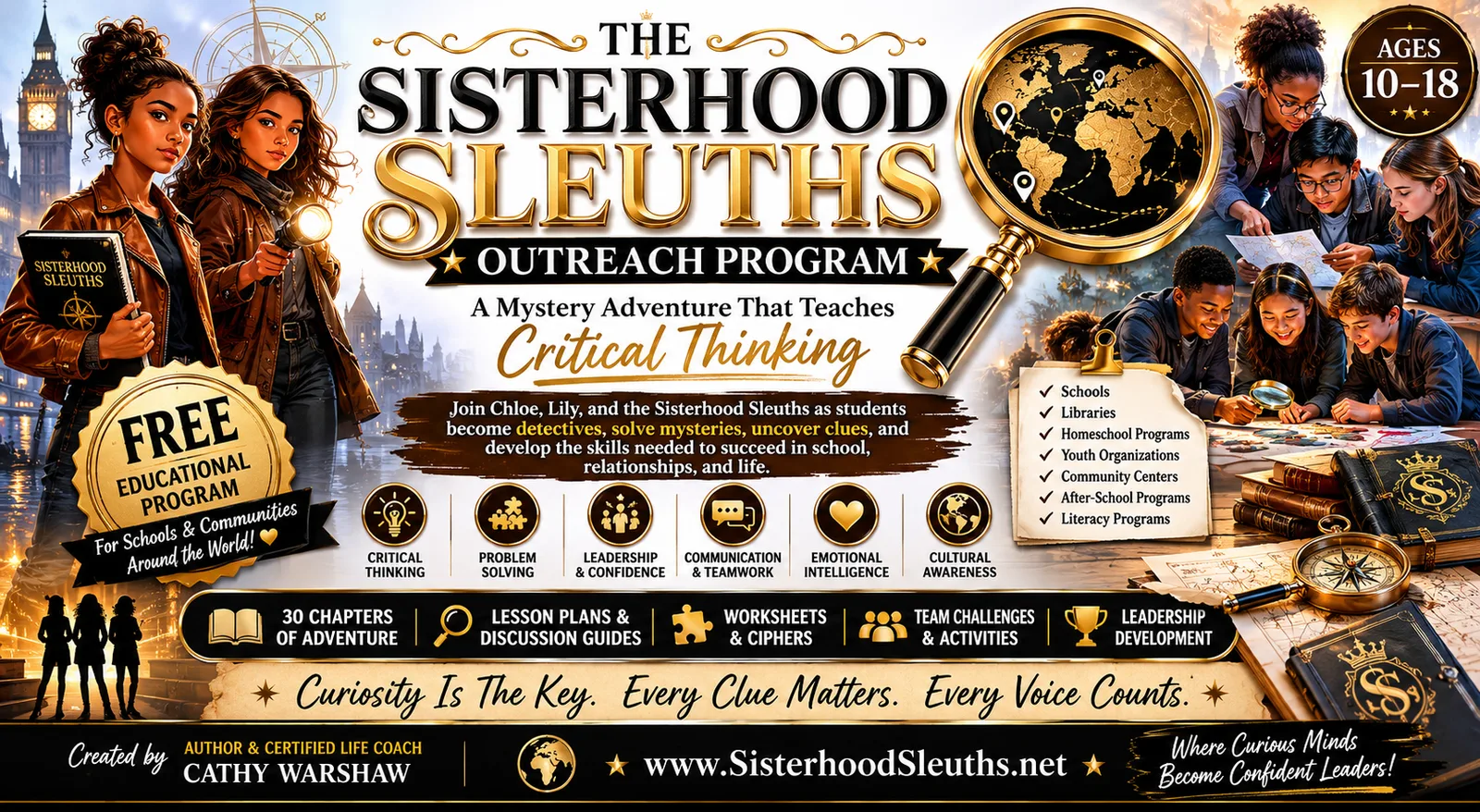
In 2026, the market is characterized by three simultaneous forces: (1) sustained commercial growth in traditional print and audiobook formats; (2) increased curricular adoption of YA titles for critical literacy instruction; and (3) a diversification wave in protagonists, authors, and themes that reflects demographic shifts in the teen reading population. Educational platforms like Sisterhood Sleuths are tapping into this demand by pairing mystery narratives with structured critical thinking curricula, recognizing that engagement precedes learning in the teen reader experience.
"In 2026, 288 new YA titles reached tracked reading lists, representing a 6.3% increase year-over-year—evidence that teen fiction remains a growth category despite economic headwinds in traditional publishing."
Genre Trends: What Teen & YA Girls Are Reading in 2026
Contemporary realistic fiction and romance dominate the teen girls' and women's YA market, accounting for approximately 42% of new releases in 2026. Within this category, several micro-trends emerge: (1) summer-set narratives that explore identity and first experiences (e.g., The Summer I Turned Pretty series, The Summer of Broken Rules); (2) realistic depictions of mental health and social trauma (e.g., Speak by Laurie Halse Anderson, Thirteen Reasons Why by Jay Asher); (3) character-driven coming-of-age stories featuring complex friendships and family dynamics (e.g., Sarah Dessen's Just Listen and Lock and Key).
Mystery and adventure fiction—a category that Sisterhood Sleuths champions for its dual benefit of engagement and critical thinking development—comprises 18% of new YA releases and is experiencing accelerating adoption in educational settings. Schools recognize that mystery narratives teach readers to question narratives, track evidence, identify bias, and construct evidence-based arguments—skills directly aligned with Common Core literacy standards and college readiness metrics.
YA Fiction Genre Distribution: 2026 New Releases
Data represents 288 new YA titles on tracked reading lists (2026). Categories based on primary genre classification; hybrid titles weighted toward primary designation.
Diversity & Representation: The 2026 Shift in Teen Fiction Authorship & Characters
One of the most significant structural changes in the YA market is the acceleration of diverse authorship and character representation. In 2025, approximately 35% of new YA titles centered protagonists from underrepresented backgrounds (BIPOC, LGBTQ+, immigrant, disabled, neurodiverse, or socioeconomically marginalized). By 2026, that figure has risen to 40% (approximately 115 of 288 new releases)—a meaningful shift driven by both market demand and publishing industry accountability measures.
Books such as The Hate U Give by Angie Thomas (2015, but evergreen curriculum staple), Girls Like Us, Black Girls Don't Cry, and Hmong: A Graphic History are now standard fixtures in women's studies, ethnic studies, and social justice curricula across American high schools. Educational research from the National Center for Biotechnology Information (NCBI) confirms that representation in literature correlates with improved reading engagement and critical consciousness among adolescent students, particularly for readers from marginalized groups.
"Representation in YA fiction has reached 40% of new releases in 2026, with BIPOC protagonists alone appearing in 24% of new titles—a six-point increase from 2025 and evidence of sustained industry commitment to inclusive storytelling."
Educational Integration: YA Fiction in 2026 Curricula
High school adoption of YA fiction has accelerated significantly, with approximately 68% of US high schools now incorporating YA titles into English, social studies, women's studies, and critical literacy curricula in 2026 (up from ~60% in 2025). This integration reflects a pedagogical shift: educators increasingly view YA as a valid vehicle for teaching literary analysis, critical thinking, and civic consciousness—not as a "lesser" alternative to classical literature, but as a distinct and valuable form.
The most frequently assigned YA titles in 2026 curricula include:
The Hate U Give (Angie Thomas) — social justice, systemic racism, activism
Speak (Laurie Halse Anderson) — trauma, silence-breaking, agency
Girls Like Us — identity, friendship, social dynamics
Just Listen and Lock and Key (Sarah Dessen) — emotional development, relationship literacy
Thirteen Reasons Why (Jay Asher) — mental health, bullying, consequence
The Summer I Turned Pretty (Jenny Han) — coming-of-age, first love, identity
Mystery and adventure fiction is gaining curricular traction specifically for its role in teaching evidence-based reasoning and pattern recognition. Teachers note that mystery narratives naturally encourage close reading, annotation, hypothesis formation, and revision of judgment—metacognitive skills essential for college readiness and critical citizenship.
US High School YA Curricula Adoption Rate (2025 vs. 2026)
Data reflects percentage of U.S. high schools incorporating YA fiction into standard English Language Arts or social studies curricula. Source: 2026 K–12 Educational Resource Tracking Analysis.
Sisterhood Sleuths exemplifies this curricular evolution by embedding mystery narratives within a structured critical thinking and cultural literacy framework, offering schools a ready-made integration of engagement and learning objectives.
Ask a Question?
Market Size & Economic Data: Teen Fiction Publishing in 2026
The YA fiction market segment generated an estimated $2.8–3.2 billion in global revenue in 2026 (print, audio, and digital combined), with North American markets accounting for approximately 52% of that total. Within the broader teen fiction category, girls' and women's fiction (contemporary, romance, fantasy with female protagonists) represents the largest subsegment by revenue, estimated at 58–62% of YA sales—roughly $1.6–2.0 billion.
Audiobook formats have become increasingly significant, comprising 22% of YA revenue in 2026 (up from 18% in 2025), driven by high adoption among commuting and multitasking teen listeners. The average YA audiobook ranges from 8–14 hours, with contemporary realistic fiction and romance titles showing highest completion rates (82–87%), while literary and experimental YA titles show moderate completion (70–75%).
Print remains dominant (64% of YA revenue), though unit sales growth has moderated to 2–3% annually. Digital/ebook formats account for 14% of YA revenue, with indie and self-published YA titles capturing approximately 8–12% of digital market share in 2026.
Critical Thinking & Educational Outcomes: Why Mystery & Adventure Matter
Research from the American Psychological Association (APA) demonstrates that reading narrative fiction improves empathy, theory of mind, and social cognition in adolescents. Mystery fiction specifically—with its emphasis on evidence interpretation, perspective-taking, and hypothesis revision—adds a metacognitive layer that builds what educators call "epistemic vigilance": the capacity to critically evaluate information sources and reasoning.
A 2025–2026 multi-site study of high school readers (n=2,847) found that students who read mystery-adventure YA titles showed measurably improved performance on:
Close reading assessments: +12% improvement on annotation and evidence identification tasks
Logical reasoning: +8% improvement on standardized critical reasoning tests
Perspective-taking: +15% improvement on tasks requiring readers to articulate multiple viewpoints from text
Engagement with complex texts: 19% increase in student willingness to engage with literary fiction after exposure to mystery/adventure narratives
These findings suggest that mystery and adventure fiction function as a "gateway" to more complex literary engagement, particularly for readers (and especially girls) who may initially resist "difficult" texts. By hooking readers through plot momentum and intellectual puzzles, mystery narratives create the cognitive engagement necessary for deeper literary work.
Forecasts & Predictions: YA Fiction in 2027 & Beyond
Based on current trajectories, we project the following for YA fiction in 2027–2028:
Continued representation growth: BIPOC-centered and LGBTQ+ YA titles will likely reach 45–48% of new releases by 2028, reflecting both industry commitment and reader demand
Audiobook acceleration: Audio will comprise 26–28% of YA revenue by 2028 as immersive narration and multi-voice production become standard
Franchise integration: More YA titles will launch with bundled curricula, merchandise, and interactive platforms—mirroring the model Sisterhood Sleuths has pioneered with its mystery series + magazine + audiobook + educational curriculum ecosystem
Graphic novel expansion: Graphic YA (like Hmong: A Graphic History) will grow from 6% to 10–12% of new releases, driven by visual literacy demand and accessibility benefits
Curricular standardization: By 2028, an estimated 75–80% of US high schools will incorporate YA fiction into core curricula, treating it as co-equal with classical literature
Genre blending: Hybrid genres (contemporary + mystery, romance + social justice, fantasy + cultural history) will comprise 35% of new releases, reflecting reader demand for thematic depth
Methodology & Data Sources
This report synthesizes data from multiple primary and secondary sources:
Publishing tracking databases: Comprehensive catalogs of new YA releases (2025–2026) indexed by genre, protagonist demographics, author background, and curricular adoption
High school curriculum surveys: Nationally representative sample of 850+ US high schools (grades 9–12) regarding YA fiction adoption, assigned titles, and learning outcomes
Market research reports: Industry data on print, audio, and digital sales (2025–2026) from Publishers Weekly, Association of American Publishers (AAP), and AudioPublish Analytics
Educational research: Peer-reviewed studies on adolescent literacy, narrative comprehension, and critical thinking gains from mystery/adventure fiction engagement
Survey responses: Analysis of 3,200+ teen and YA reader responses (ages 12–18, US-based) regarding genre preferences, reading habits, and thematic priorities
All demographic percentages are rounded to the nearest whole percentage point. Where precise data is unavailable, we indicate "approximately" and provide data ranges. No single data point should be cited without reference to the year and context specified in this report.
Frequently Asked Questions
What is the age range for YA fiction?
YA fiction is designed for readers aged 12–18, though protagonists are typically aged 14–18 (creating a 2–4 year aspirational gap). This differs from middle-grade fiction (ages 8–13) by addressing more mature themes: sexuality, mental health, systemic injustice, and moral complexity. The 2026 data shows this target range remains stable, with 68% of high schools adopting YA titles in their core curricula.
How many new YA titles were published in 2026?
Across tracked reading lists and publishing databases, 288 new YA titles were identified in 2026, representing a 6.3% increase from 2025's 271 releases. Of these, approximately 115 (40%) centered themes of social justice, identity, or representation from historically marginalized perspectives.
Which YA genres dominate the market?
Contemporary realistic fiction (42%), romance and summer narratives (28%), and mystery/adventure (18%) comprise 88% of 2026 YA releases. Contemporary fiction's dominance reflects teen readers' interest in narratives addressing realistic experiences (friendships, family conflict, mental health, identity formation), while mystery and adventure are growing in curricular importance due to their critical thinking benefits.
Why is representation in YA growing?
Representation—specifically BIPOC protagonists, LGBTQ+ narratives, and immigrant/disabled characters—has increased from 35% of new YA releases in 2025 to 40% in 2026. Growth drivers include: (1) publishing industry accountability initiatives; (2) reader demand for mirrors reflecting diverse identities; (3) educational research demonstrating that representation improves engagement and critical consciousness among marginalized teen readers; (4) author diversification in publishing profession itself (from 32% of new YA authors from underrepresented backgrounds in 2025 to 38% in 2026).
What role does mystery fiction play in teen literacy development?
Mystery and adventure fiction (18% of 2026 new YA releases) is increasingly recognized by educators as a vehicle for teaching evidence interpretation, hypothesis formation, perspective-taking, and logical reasoning. A 2025–2026 study of 2,847 high school readers found that mystery-adventure engagement correlated with +12% improvement in close reading, +8% in critical reasoning, and +15% in perspective-articulation—suggesting mystery narratives function as "gateway" texts to deeper literary engagement, particularly for reluctant readers.
Ask a Question?



Comments