
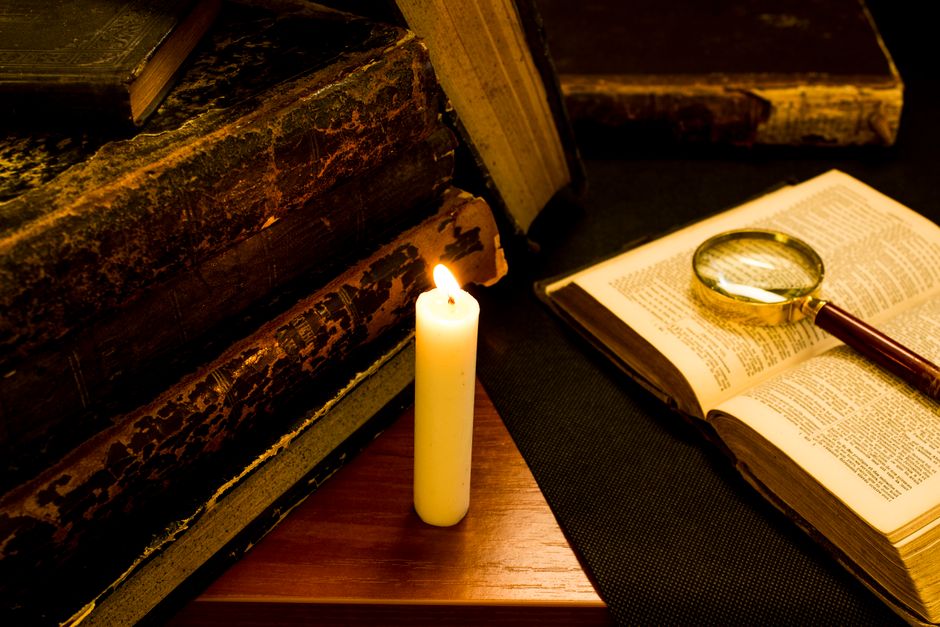
Historical Mystery Books: Your Guide to Unraveling the Past

Historical mystery books are some of the most addictive stories out there. They're not just about solving a puzzle—they're about stepping into another time period, noticing clues hidden in historical details, and uncovering secrets that have been buried for centuries.
If you're drawn to both detective work and history, these books might become your new obsession. Here's what you need to know about the genre and how to find your next great read.
What Makes Historical Mystery Books Different
Historical mystery books do something pretty special: they combine two totally different storytelling styles into one.
On one hand, you've got the mystery side. Someone needs to figure out what happened. There are clues scattered throughout, red herrings to throw you off track, and that satisfying moment when everything clicks into place. You're basically playing detective while you read.
On the other hand, you've got the history. The story isn't just set in the past—the past *matters* to solving the mystery. What people knew back then, how they communicated, what technology existed, the social rules of the time... all of it becomes part of the puzzle.
When these two things come together, you get a story where you're not just reading about history—you're investigating it. You're asking questions like: Could this really have happened? What would people have believed back then? What clues would survive to the present day?
Popular Historical Mystery Books Worth Reading
Let's talk about some books that really nail this blend of history and mystery.
The Name of the Rose takes you into a medieval monastery where a monk is trying to solve a series of murders. The mystery winds through ancient texts, religious debates, and the everyday secrets of monastery life. It's complex, atmospheric, and makes you think about how knowledge gets hidden and preserved.
The Historian follows a reader as they chase down the legend of Dracula across Eastern Europe and history. It's told through letters and diary entries, making you feel like you're uncovering a real historical conspiracy. The mystery deepens with every layer you peel back.
The Shadow of the Wind is set in Barcelona after the Spanish Civil War. Your main character discovers a mysterious book and becomes obsessed with finding out who wrote it and why it was hidden. The city's history and secrets are as much a character as the people in the story.
The Amelia Peabody series offers something a bit different. Amelia is a Victorian-era archaeologist who investigates mysteries while exploring Egyptian tombs. If you love the idea of combining adventure, archaeology, and puzzle-solving all in one, this series might be perfect for you.
More recent titles like The Stolen Queen and The Frozen River show how alive this genre is right now. New authors are constantly finding fresh time periods to explore and new types of mysteries to weave into historical settings.
If you're looking for a community of readers who are just as passionate about uncovering mysteries as you are, Sisterhood Sleuths brings together curious minds who love adventure-based storytelling combined with real learning.
Ask a Question?
Different Time Periods, Different Stories
One cool thing about historical mystery books is how many different eras they cover.
You can explore ancient settings where you're piecing together evidence from archaeology and old texts. You can step into the Victorian era and investigate using the technology and social rules of that time. You can even jump to the 1940s and solve mysteries in a more recent past that still feels distant enough to be fascinating.
Each time period brings its own flavor to mystery-solving. A detective in the 1920s can't just run a DNA test or check security cameras. They have to rely on observation, interviews, and logical reasoning. Sometimes those constraints make the mystery *harder* to solve—and way more satisfying when you finally figure it out.
The time period also shapes what kinds of secrets people keep and why. Politics, religion, social class, gender roles—all of these things change across history, and they all affect how a mystery unfolds.
Why Historical Mystery Books Develop Your Critical Thinking
Here's something interesting: when you read historical mysteries, you're not just following a story. You're learning to think like an investigator.
You start noticing details. What seems unimportant at first? What gets mentioned casually that might matter later? You begin asking questions about what you're reading. Is this character trustworthy? Would that actually be possible in that time period? What do I actually know versus what am I assuming?
These are the exact skills you need for critical thinking. You're analyzing evidence, spotting patterns, questioning assumptions, and testing ideas against what you know. That's detective work, but it's also how you think through real problems in your own life.
Many readers discover that historical mystery books make them more curious about actual history too. You finish reading about a character investigating something in Victorian London, and suddenly you want to know: Did that really happen? What was London actually like? This is how real learning starts—with genuine curiosity, not because someone told you that you *had* to learn something.
How to Choose Your First Historical Mystery
If you're new to this genre, start by thinking about what time period calls to you. Are you fascinated by ancient Rome? Medieval Europe? The American frontier? The 1920s?
Your answer matters because you'll be spending hours in that time period. If you're genuinely curious about it, the book becomes so much more engaging.
Next, think about what kind of protagonist appeals to you. Do you want a professional detective? An archaeologist? An ordinary person who stumbles into a mystery? A series where you follow the same character across multiple books, or standalone stories where each book is different?
The beautiful thing about historical mystery books is that there are so many options. Series formats let you really get to know characters and watch them grow across multiple investigations. Standalones give you complete stories where everything gets resolved by the end.
If you want personalized recommendations that match your specific interests—whether that's a particular historical period, a certain type of protagonist, or a specific mystery-solving style—Sisterhood Sleuths creates content that helps curious readers discover stories that match their passions.
What to Expect When You Start Reading
Historical mystery books can sometimes feel slower at the beginning than contemporary mysteries. This is actually a feature, not a bug.
The author is often taking time to build the world and make you feel like you're actually *in* that time period. You're learning how things worked, what the social landscape looked like, and what made this particular place and time unique. This groundwork matters because it helps you understand the clues when they start appearing.
Stick with it through those early chapters. Once you're oriented to the time period and you start caring about the characters, the mystery pulls you in hard. You'll find yourself staying up late, desperate to know what happens next.
Some historical mysteries are told through multiple perspectives or formats (letters, diary entries, historical documents mixed with modern narration). This can feel like extra work at first, but it's usually there for a reason—it's part of how the author is building the mystery itself.
People Also Ask
Are historical mystery books appropriate for teens?
Absolutely. Many historical mystery books are specifically written for or appeal strongly to teen and young adult readers. Just like any genre, some books are lighter and some are darker. Check the content warnings or reader reviews to see if a specific book matches what you're comfortable with. The best part is that teen readers often love these books because they challenge you to think critically and don't underestimate your intelligence.
Do you need to know history to enjoy historical mystery books?
Not at all. Good historical mystery books teach you the history as you read. The author gives you enough context to understand what's happening and why it matters. If anything, these books are a fun way to discover history because you're learning through a compelling story rather than memorizing facts.
What's the difference between historical mystery and historical fiction?
Historical fiction tells a story set in the past, but the main focus is on the characters and events. Historical mystery is set in the past, but the main focus is on solving a puzzle. With historical mystery, you're actively investigating alongside the characters. There's a central question driving the plot: Who did it? What happened? Why was this hidden? That investigative element is what separates it from straight historical fiction.
Can you read historical mystery series out of order?
It depends on the series. Some, like the Amelia Peabody books, are designed so each book tells a complete mystery, but you'll enjoy them more if you read them in order because you're following character relationships and development across time. Other series are more like standalones that happen to share a setting or character. Check the book descriptions or reader communities to see what other people recommend for your specific series.
Ask a Question?


Comments